Collier Hills reads on paper like Buckhead's affordable side door. Smaller lots, older cottages, one BeltLine spur, and a price tag that runs a step below the neighborhoods immediately north. The metro median tells a reassuring story: $416,000 across the eleven-county Atlanta REALTORS® footprint in February 2026, with roughly 3.7 months of supply.
That story does not survive first contact with Collier Hills. The mechanism that sets prices here is not the amenity ring and not the school cluster. It is the number of houses that actually change hands in a year.
The number that reframes everything
Across the trailing twelve months, roughly fourteen homes sold inside Collier Hills at an average price near $1.14M, with a list-to-sale ratio just under 99% and an average of ten days on market. Redfin's June 2026 snapshot of the same footprint puts the recent average closer to $1.25M and tags the area a 70 on its competitive index, with hot homes clearing about 7% over list.
Fourteen sales. In a full year.
That is the entire supply a Collier Hills buyer is competing for. It is smaller than the closing calendar of a single busy agent in the neighborhoods immediately around it. When a buyer says they want to be patient and wait for the right cottage on the right block, they are usually not budgeting for how thin the pipeline actually runs.
Here is what that translates into at the offer table, using the trailing-year data:
| Price band | What typically clears | Time to decide |
|---|---|---|
| Under ~$900K | Original-condition cottages, quads, or tear-down candidates near I-75 or Collier Rd | Days, often before public tour |
| ~$900K to $1.3M | Renovated 1930s–40s cottages, 3 bed / 2 bath, modest lot | About ten days, frequently at or above list |
| ~$1.3M to $2M+ | Full renovations or newer builds with pool, guest house, or larger lot | Weeks, but the pool of comps is measured in single digits |
The friction is not that Collier Hills is expensive. The friction is that the sample size is so small that one unusual sale meaningfully bends the comps a buyer's appraiser will pull three months later. When a home closes 7% above list on a nine-day timeline, that transaction is not an outlier in a big data set. It is one of the fourteen data points.
Why the lot map matters more than the price map
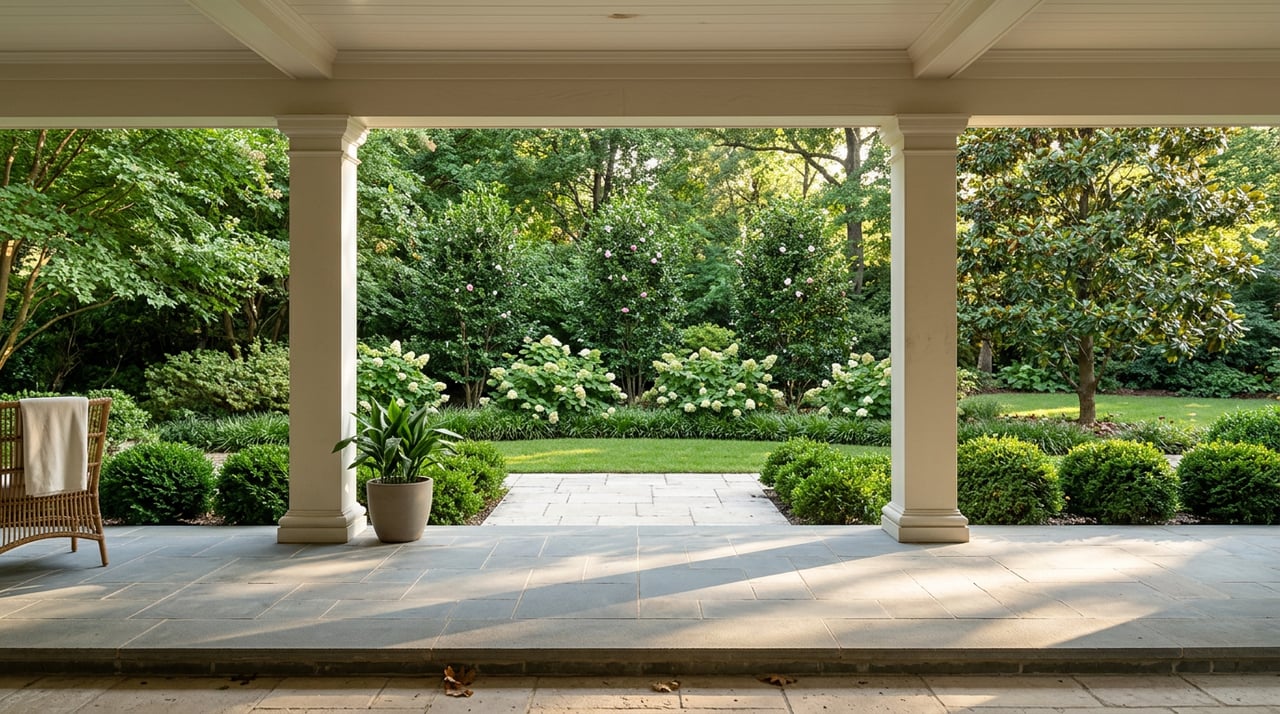
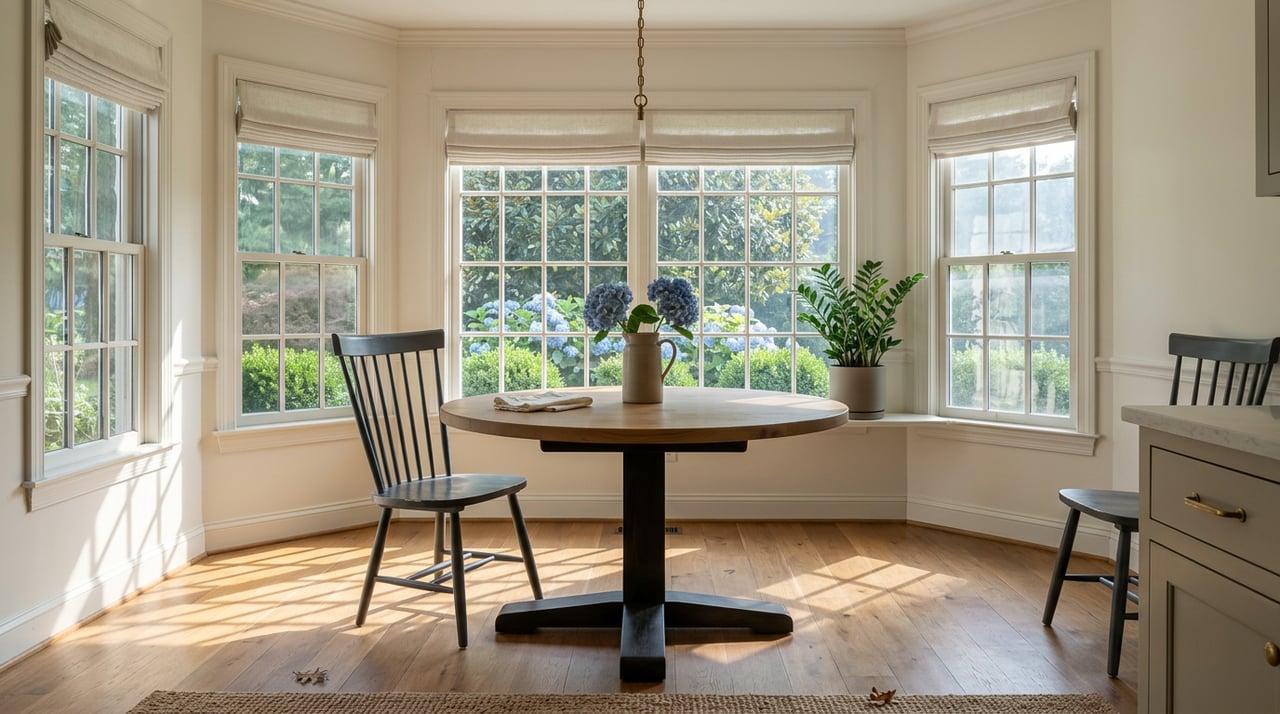
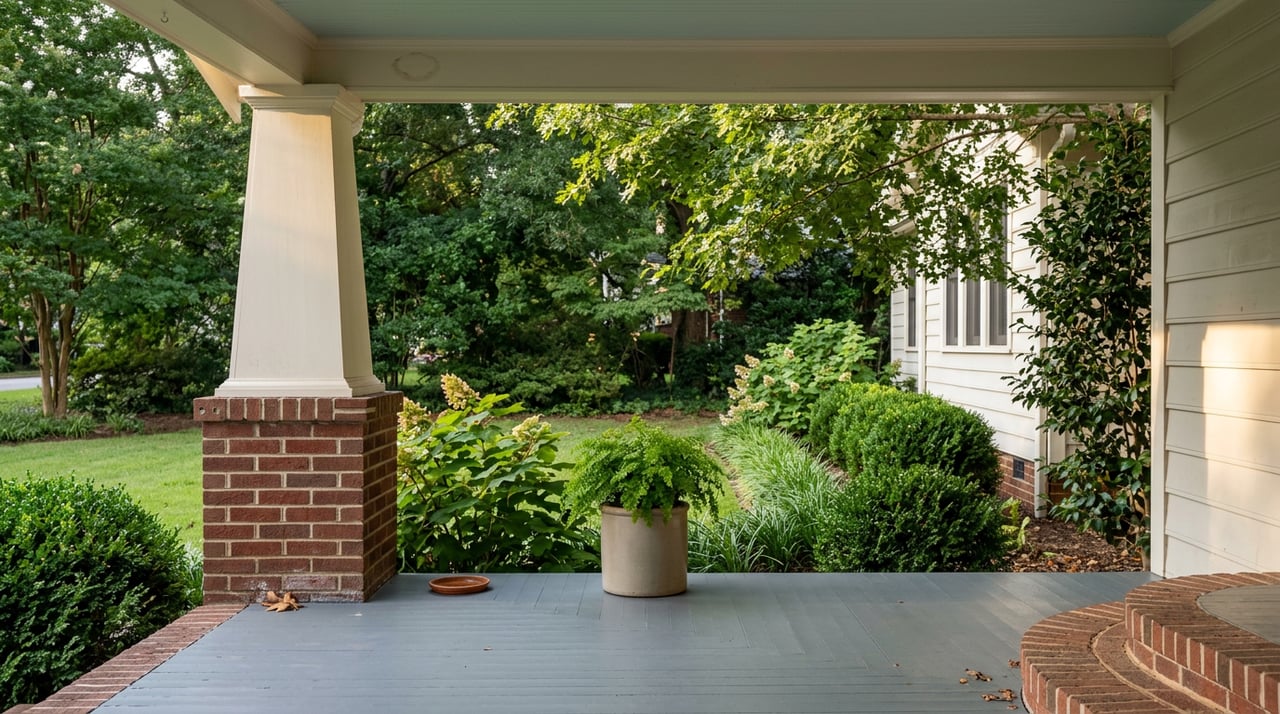
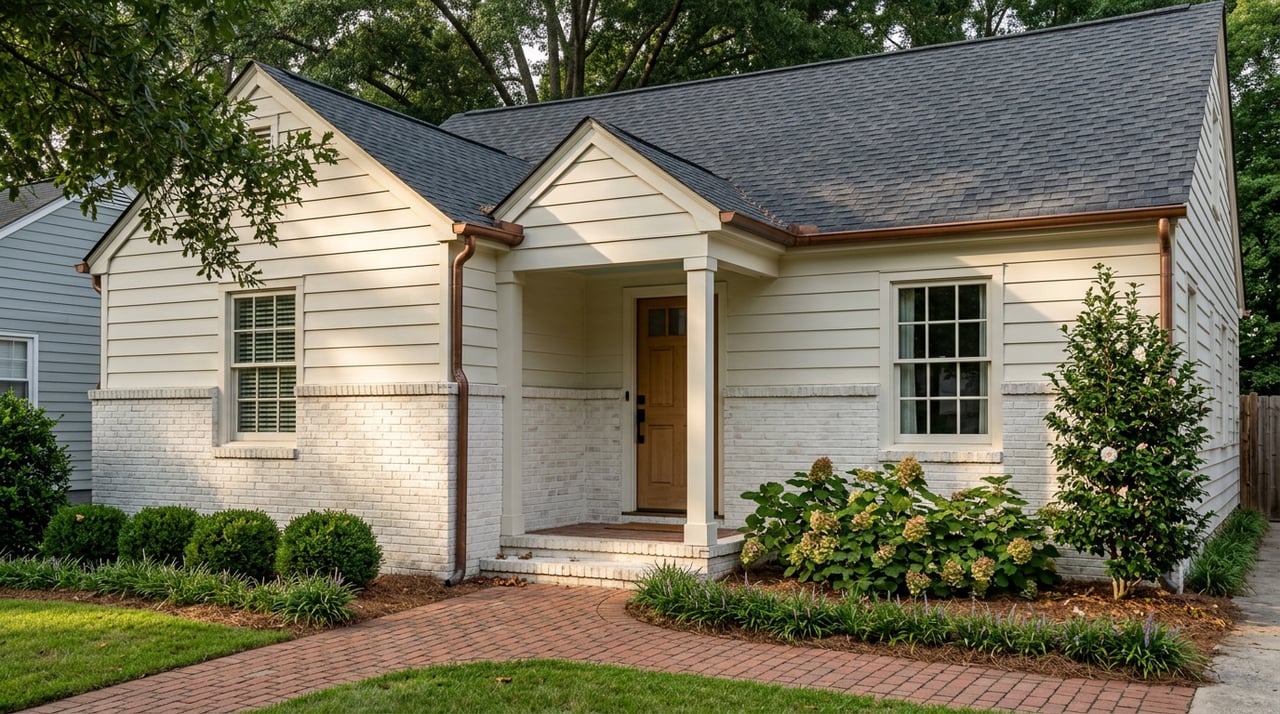
Collier Hills is almost a century old. The southwest corner, along Echota and the streets tucked toward Tanyard Creek, developed in 1940–41 as American Small Houses built by Herbert W. Griffin and his contemporaries. The northeast corner, now called Collier Hills North along Dellwood, Redland, and Golfview, filled in around the same time. That timing produced a housing stock of compact one- and one-and-a-half-story homes on lots that run smaller than the rest of Buckhead.
For a buyer moving over from Peachtree Battle, Haynes Manor, or Garden Hills, that lot geometry is the single biggest adjustment. The renovated 1940 traditional at $1.2M in Collier Hills is not sitting on a Buckhead half-acre. It is often sitting on a fifth of that. What buyers are paying for, above the square footage, is the ring:
- The BeltLine's Northside Trail, roughly 2.9 miles from I-75 through Tanyard Creek Park to Peachtree Creek, running the neighborhood's eastern edge
- Tanyard Creek Park, 14.5 acres, with the Civil War Battle of Peachtree Creek site inside it
- Louise G. Howard Park, deeded to the city in 2007, filling the gap between the golf course and Collier Road
- The nine-hole Bobby Jones Golf Course and the Murray Golf House, which now anchors the Georgia Golf Hall of Fame
- The Bitsy Grant Tennis Center, with 13 clay courts, 10 hard courts, and eleven pickleball courts
- Atlanta Memorial Park immediately north
- The Rivers Elementary / Sutton Middle / North Atlanta High attendance line (buyers should confirm current assignments with Atlanta Public Schools directly)
None of those amenities are inside the buyer's lot line. That is the mechanism. Collier Hills prices in the ring, then discounts for the lot. Peachtree Battle prices in the lot, then adds for proximity. Two buyers looking at similar list prices are actually buying two different asset structures.
The Howell changed the south edge without changing the housing supply
The single largest recent development at the neighborhood's edge is The Howell, a 210-unit apartment project built over I-75 on the site of the former Atlanta Food Truck Park. Retail at the base filled by October 2024, and the residential leased quickly at rents in the $1,900-and-up range.
What that project does for a Collier Hills buyer is subtle. It does not add a single detached home to the fourteen-a-year pipeline. What it does is shift the walk-shed. The southern blocks near Collier Road and the I-75 interface now sit within a short walk of new coffee, food, and services that did not exist three years ago. That has quietly raised the ceiling on what the southern edge of the neighborhood commands, without giving buyers any new inventory to bid on.
If a buyer has been watching Collier Hills passively for a year and cannot understand why the "affordable side door" keeps quoting numbers that look like the neighborhoods above it, this is a large part of the answer. Density arrived on the border. The single-family map did not expand to meet it.
What this means when you're writing an offer
The mid-funnel takeaway is not "act fast." It is that the usual playbook a buyer brings from a normal-supply market does not fit here. A few adjustments worth thinking through with your agent before you start touring:
- Pre-inspect where possible. Ten days on market and 99% list-to-sale ratios do not leave a comfortable inspection contingency window. Sellers of 1930s and 1940s cottages know their buyers know what they are getting. A pre-offer walkthrough with an inspector on renovated stock is often the difference between a clean bid and one that reads as tentative.
- Budget for the comp problem, not just the purchase price. With fourteen sales a year, the appraisal is the second negotiation. If you are financing above 80%, model an appraisal-gap scenario before you decide your top number.
- Read the lot before the finishes. Collier Hills's small-lot geometry is what makes some renovations feel bigger than they are and others feel oddly constrained. A staged interior can hide a driveway or a setback problem that will show up on your title work.
- Understand what the ring costs you if it changes. Bobby Jones is a public course. Bitsy Grant is a public tennis and pickleball center. The Northside Trail is city-managed BeltLine property. All three are civic assets, not private ones, which is a stability feature and also something to keep an eye on when City of Atlanta capital plans shift.
- Ask about the tear-down math. A handful of the trailing-year sales were land-value transactions where the existing house is not the story. That is a very different negotiation than a renovated-cottage negotiation, and the two look similar on the listing photos.
A short FAQ
Is Collier Hills technically Buckhead? The zip code splits between 30318 and 30309, and the neighborhood is generally described as south Buckhead, bordered by I-75 to the south, Northside Drive to the west, Tanyard Creek to the east, and Atlanta Memorial Park to the north.
Why does the average sale price differ between sources? Different data pulls use different footprints and different windows. The Buckhead.com trailing-twelve-months snapshot near $1.14M and the Redfin June 2026 snapshot near $1.25M are not contradicting each other. They are counting slightly different sets of closings. Both are useful; neither is the final word for pricing your specific house.
Does the BeltLine premium show up in comps? On paper it is hard to isolate, because almost every Collier Hills home is within a short walk of the Northside Trail. Functionally, the homes that back to or face the trail corridor tend to sell first and to attract multiple offers when they list.
How does turnover compare to Morningside or Virginia-Highland? Both of those neighborhoods generate several times the annual sales volume of Collier Hills at comparable price points. A buyer who is truly flexible across those markets will see far more inventory in the same six-month window by widening the search.
If you are trying to decide whether Collier Hills is the right fit against Peachtree Battle, Brookwood Hills, Morningside, or the northern edge of Midtown, the useful conversation is not about the median. It is about the fourteen. GibsonBreen can walk you through the trailing-year sales one by one, show you which blocks are actually comping which, and build an offer strategy around the specific pipeline you're competing in.
Let's connect.